Comparison
Reception Robot vs Concierge Robot: What a Hotel Lobby Needs
Reception robots handle check-in support, wayfinding and FAQs; concierge robots handle guidance, recommendations and conversation. Compare tasks, hardware and payback.
Quick answer
Reception supports arrival; concierge supports the stay. baluo-3.0 uses a 15-inch chest screen, a 7-inch expression screen, a 20Ah battery and a 40 kg body. Run a 4-week pilot and measure queue time, answer coverage and hand-off rate.
On this page
A reception robot and a concierge robot look similar in a lobby. Both have a screen, a voice interface and a mobile base. The difference is the job: reception supports arrival, while concierge supports the stay. Choosing the wrong one produces a machine that greets guests but cannot answer the question they actually ask.
This guide compares the two roles, the hardware overlap and the payback logic. It is written for hotel operators who have a lobby problem but have not yet defined it.
What is the difference in one sentence?
A reception robot handles the first thirty seconds after arrival: welcome, direction, check-in guidance and common questions. A concierge robot handles the next thirty minutes: where to eat, how to get there, what is open, and what the hotel recommends.
The placement follows the job. A reception unit sits near the entrance or the desk queue. A concierge unit sits where guests linger — the lobby lounge, the lift lobby or the outlet corridor.
What does a reception robot do?
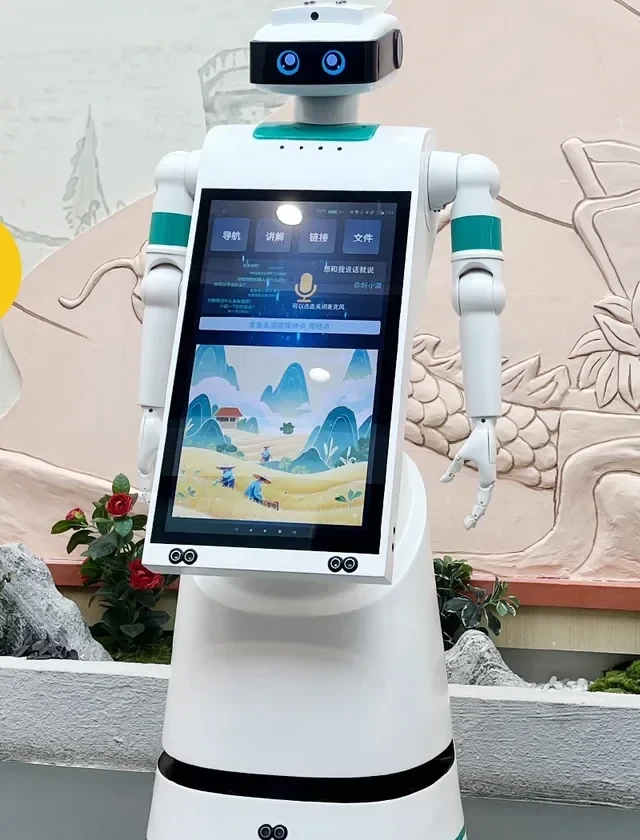
A reception robot is an arrival assistant. It welcomes the guest, answers basic questions, points to the lift or the desk, and can support a check-in flow if the PMS allows it. It is strongest when the lobby has a queue at peak, poor wayfinding or a wide language mix.
| Task | Reception robot | Concierge robot |
|---|---|---|
| Welcome | Primary | Secondary |
| Wayfinding | Primary | Primary |
| Check-in guidance | Primary | Rare |
| Hotel FAQ | Primary | Primary |
| Outlet and local recommendations | Secondary | Primary |
| Multilingual conversation | Primary | Primary |
| Placement | Entrance or desk queue | Lounge or lift lobby |
| Success metric | Queue time, direction questions | Guest engagement, answer coverage |
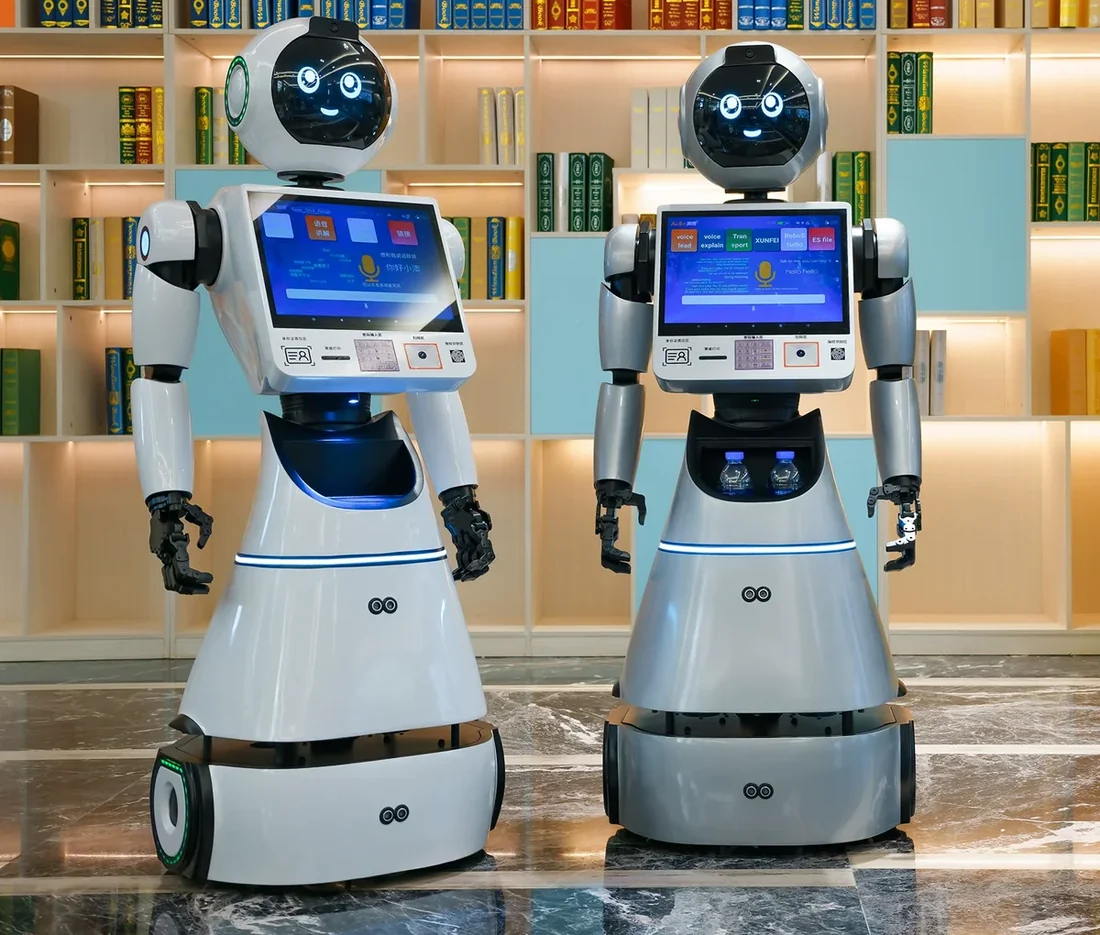
The table is not a rulebook. A small hotel may combine both roles in one unit and accept a narrower answer set. The factory catalogue lists the reception platforms, including the baluo-3.0 with a 15-inch chest screen and a 7-inch expression screen.
What does a concierge robot do?
A concierge robot is a guide and information point. It answers questions about outlets, hours, Wi-Fi, breakfast, transport and local attractions. It may also provide directions to meeting rooms, the spa or the car park.
The work is content-heavy. A concierge robot is only as good as its answer set, and the answer set goes stale. The property needs a named content owner, a monthly review and a process for seasonal changes. A robot that recommends a closed restaurant is worse than a printed directory.
Which one improves guest experience more?
It depends on the lobby’s actual problem. Start with the questions the front desk receives:
- If the top questions are “where is the lift?”, “where is breakfast?” and “how do I check in?”, a reception robot addresses the flow.
- If the top questions are “where should we eat?”, “what is open?” and “how do we get there?”, a concierge robot addresses the stay.
A city hotel with a busy arrival peak usually benefits from reception support. A resort with dispersed outlets and long stays usually benefits from concierge content. The city hotel solution and resort hotel solution show the different layouts. The case studies page describes reference deployment patterns, not named client projects.
What hardware do they need?
The hardware can be the same platform. The baluo-3.0 uses a 15-inch chest screen, a 7-inch expression screen, a 20Ah battery and a 40 kg body, with an optional storage locker. A reception configuration may add a check-in flow; a concierge configuration may add a larger content set and a different stand.
The differences are in the software and the placement, not only the chassis. The hotel service robot overview explains the shared platform; the product range shows the available configurations.
Can one robot do both?
Partly. One unit can run a welcome screen, answer FAQs and give directions. It cannot be in two places at once, and a combined answer set becomes broad and shallow.
| Capability | One unit can do both? | Why |
|---|---|---|
| Welcome | Yes | Same greeting flow |
| Wayfinding | Yes | Same map and directions |
| Check-in guidance | Yes, with PMS support | Needs a check-in flow |
| Outlet recommendations | Yes, with content | Needs a maintained answer set |
| Queue relief at arrival | Partly | Placement decides |
| Lounge engagement | Partly | Placement decides |
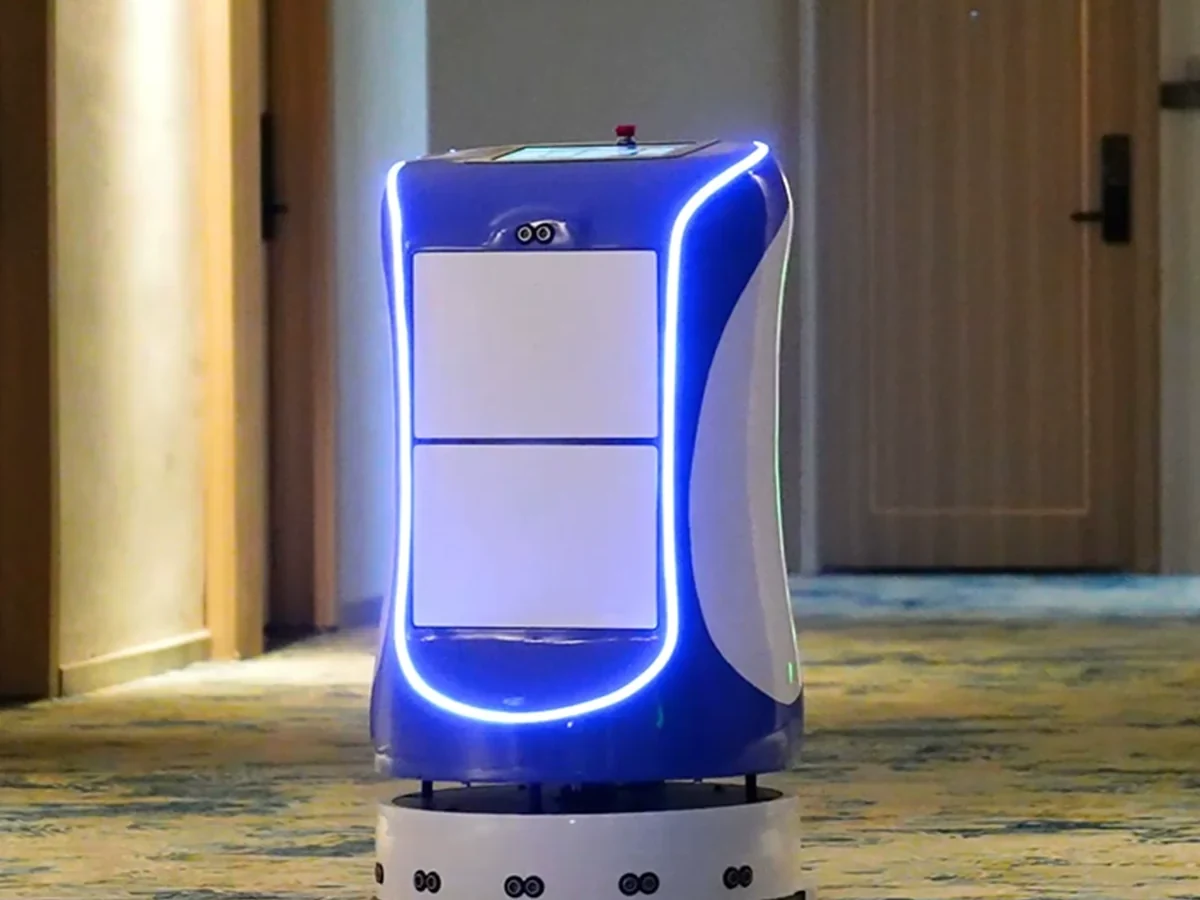
| Delivery | No | Different compartment and lift workflow |
A hotel with one lobby and a modest guest flow can combine the roles. A hotel with a large arrival peak and a separate lounge should separate them. The hotel delivery robot is a different product; do not expect a lobby unit to replace it.
Which one pays back faster?
Neither pays back like a delivery robot, because the value is queue relief, language coverage and guest experience rather than direct labour displacement. That does not make the investment wrong; it makes the business case different.
The price guide explains the configuration lines. The ROI calculator is built for delivery and cleaning cases, so use it for the labour side and treat the lobby robot as a service-quality investment with its own metrics.
A useful test is to count the front-desk questions for two weeks. If 30% of them are directions or basic FAQs, a lobby robot has a case. If most are payments, complaints and room changes, the robot will not help.
How do you pilot a lobby robot?
Run a four-week pilot in the actual lobby position:
- Log the top 30 guest questions and the languages used.
- Build the answer set and assign a content owner.
- Place the unit and observe the first interaction.
- Measure queue time, answer coverage and hand-off rate.
- Review the content weekly and remove stale answers.
The deployment guide covers the network and site survey; the deployment checklist lists the access and power checks. For a lobby layout review, send the plan to the contact page.
Where to go next
- Compare the reception robot and concierge robot configurations.
- Review the hotel service robot category and product range.
- Read hotel service robot types for the full taxonomy.
- Check what is a hotel robot for the definitions.
- Estimate a delivery case with the ROI calculator.
- See the factory page for build and quality checks.
- Send the lobby plan through the contact page.
- Message the factory on WhatsApp.
The lobby robot is a content product as much as a hardware product. Choose the role, assign the owner, and measure the questions it answers — not the number of greetings it delivers.