
Product / Umbrella
Hotel service robot: what it can and cannot do
Response within 24 hours · Warranty: 12 months
Reviewed by Aobotics Project Team
Quick answer
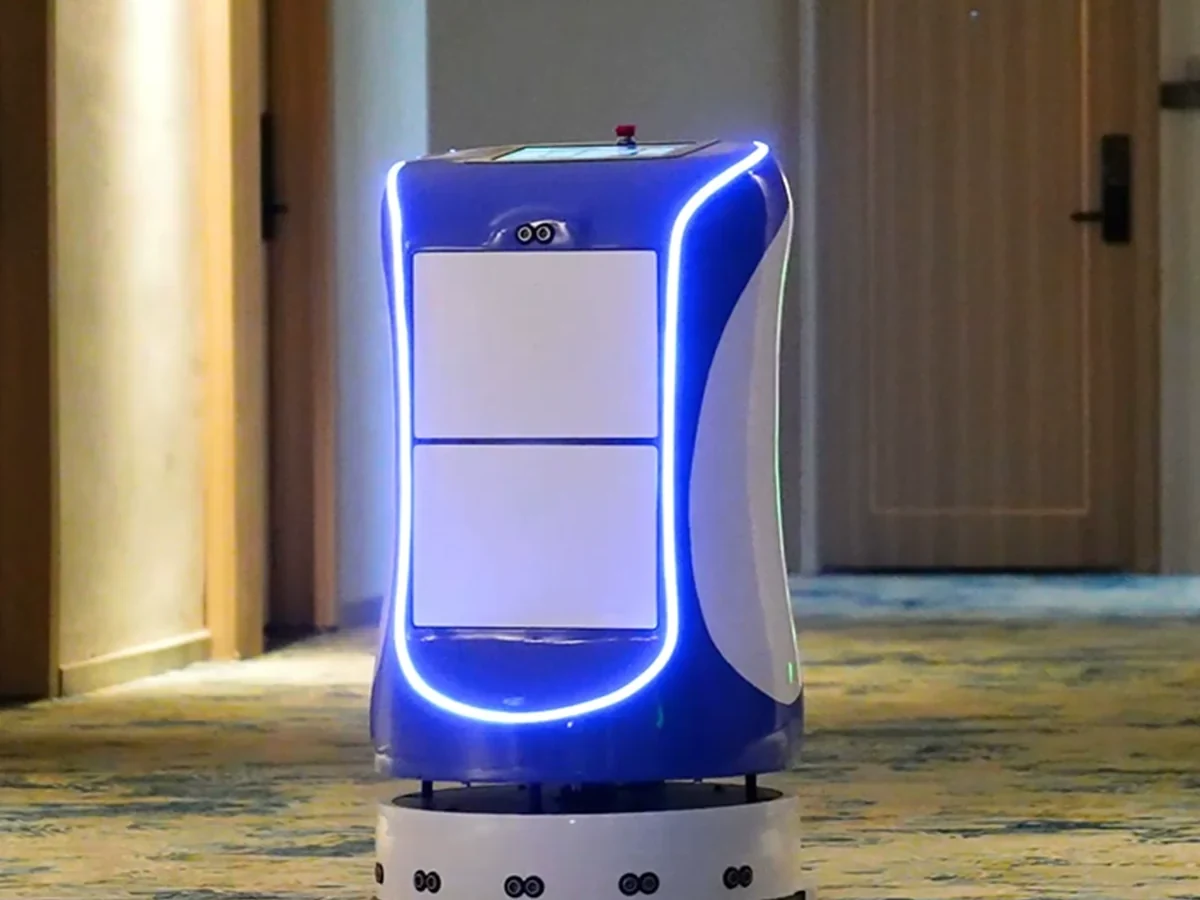
A hotel service robot — also called a hospitality robot, guest service robot or hotel assistant robot — is an umbrella term for delivery, reception and concierge robots. Delivery units move amenities, F&B and parcels; reception units welcome and guide guests. The right starting point is a single, high-frequency task — usually amenity delivery — not a multi-purpose pilot.
- Robot lines
- 2
- Core hotel tasks
- 5
- Warranty
- 12 mo
- Per project
- Quote
Task matrix
Which hotel tasks can a service robot take?
Match the task to the platform before comparing brands.
| Task | Robot type | Fit | Main constraint |
|---|---|---|---|
| Amenity and towel delivery | Delivery | High | Lift access and loading workflow |
| F&B and late-night menu | Delivery | Medium | Spill, temperature and presentation |
| Parcel and courier delivery | Delivery | High | Compartment size and chain of custody |
| Welcome and wayfinding | Reception | High | Lobby placement and content maintenance |
| Check-in support | Reception | Medium | PMS access and legal check-in process |
| Luggage transport | Luggage (separate) | Medium | Rated load and safe route |
| Public-area cleaning | Cleaning (separate) | Medium | Floor type, obstacles and staffing |
Selection
Which task should a hotel automate first?
Pick the task with high frequency, low variability and a clear owner.
Amenity delivery is usually the best first task: it is frequent, light, predictable and easy to measure. F&B is more visible but harder to standardise. Reception is high-value but needs content work and a clear escalation policy.
A pilot should run for at least two weeks and measure four things: tasks completed, average round-trip time, exception rate and staff time saved. If the exception rate is high, fix the route or the lift before adding more robots.
- High frequency + low variability = good first task.
- A named owner in the front office is more important than the model.
- Measure exceptions, not only successful deliveries.
- Add a second task only after the first one is stable.
Commercial
Should a hotel buy or rent a service robot?
The answer depends on utilisation and accounting.
Rental availability depends on the market and the fleet partner. Confirm the term, service scope and exit conditions before comparing the monthly fee with a purchase.
| Factor | Buy | Rent |
|---|---|---|
| Upfront cost | Higher | Lower or none |
| Monthly cost | Service and spares | Rental fee includes service |
| Asset ownership | Yes | No |
| Upgrade path | Resale or trade-in | Swap at end of term |
| Best for | Stable, long-term use | Pilot, seasonal or event use |
| Risk | Utilisation risk | Commitment term and exit fees |
Integration
What does a hotel service robot need from the building?
Four building systems decide whether the pilot works.
- Lift control: dry contact, RS485 or API; a service lift is strongly preferred.
- Network: stable Wi-Fi in corridors, lift lobbies and the service core.
- PMS: read-only arrival status or a task queue, depending on the use case.
- PABX: room-call notification if the property wants phone alerts.
If any of the four is missing, the project can still run with a manual fallback, but the pilot scope must say so in writing.
Business case
How do you build the business case?
Start with staff time, not headcount.
A delivery robot removes the walk, not the person. The business case is the value of the front-office time released for guest work, plus faster delivery and fewer missed requests. Headcount reduction is a separate decision and should not be the pilot promise.
Use the ROI calculator with the property’s own request volume, round-trip time and labour cost. If the payback is longer than the property’s planning horizon, start with a rental or a smaller pilot.
Model matrix
Which hotel service robot fits which task?
The umbrella category spans several platforms. Compare the three main hotel configurations before choosing a task.
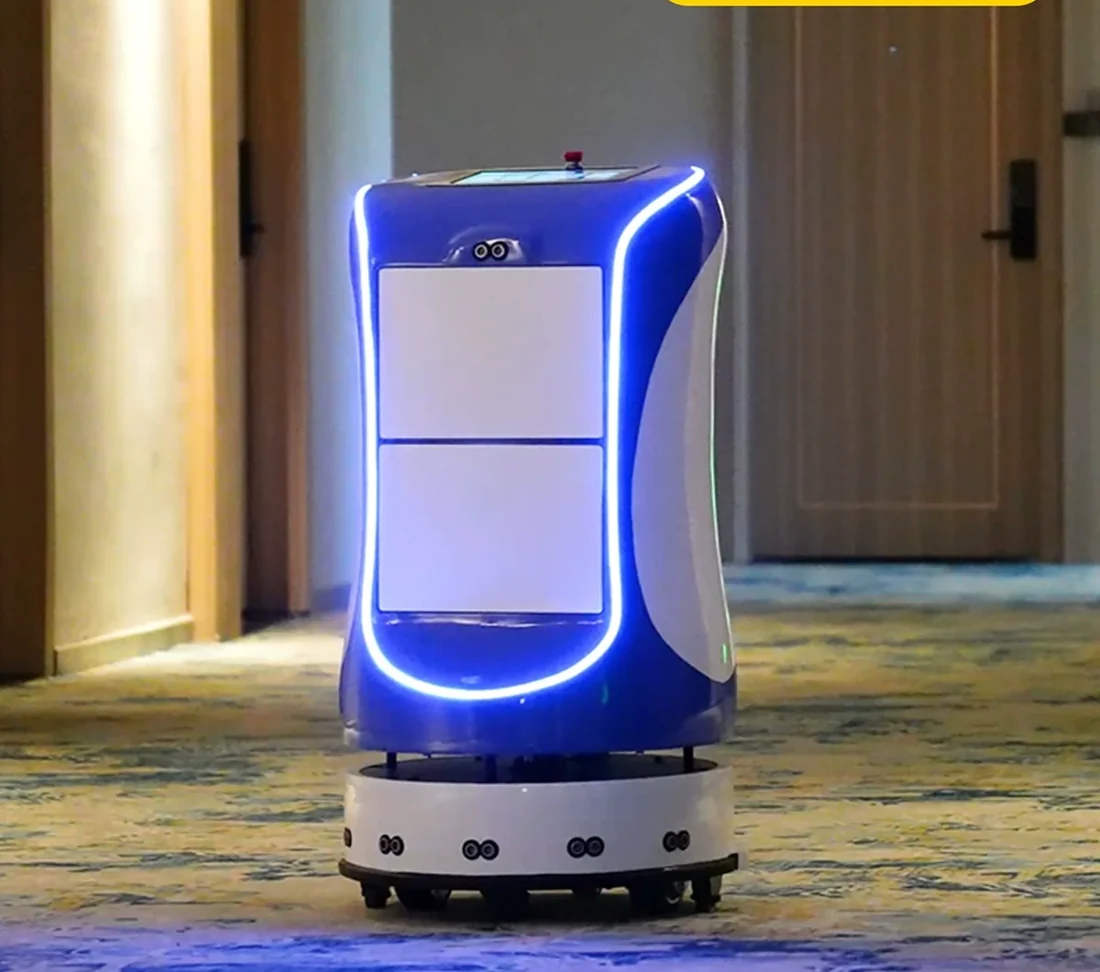
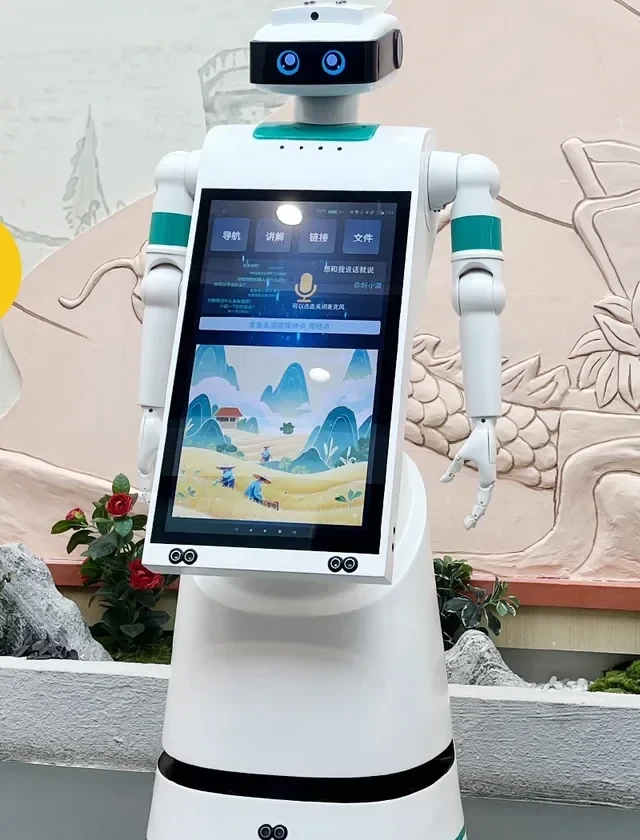
| Parameter | AOBOTETE | baluo-3.0 | PEIQIAOBO |
|---|---|---|---|
| Type | Delivery | Reception / concierge | Food service |
| Primary task | Amenities, towels, F&B and parcels | Welcome, wayfinding and guest answers | Tray delivery in outlets and banquets |
| Screen | 10.1-inch touch | 15-inch chest + 7-inch face | 21.5-inch chest + 10.1-inch head |
| Battery | 15Ah lithium | 20Ah polymer lithium | 15Ah lithium |
| Operating system | Android | Android | Android |
| Memory | 8 GB | 4 GB | 4 GB |
| Dimensions | 100 cm | 140 cm | 140 cm |
| Weight | 35 kg | 40 kg | 40 kg |
| Languages | Chinese / English | Chinese / English | Chinese / English |
| Lift control | Dry contact / RS485 / API | Where fitted | Usually not required |
| Network | Wi-Fi | Wi-Fi | Wi-Fi |
| Best task | Room and amenity delivery | Lobby guidance | Restaurant and banquet trays |
| Storage | Locked compartment | Optional locker | Tray stack |
| Warranty | 12 months | 12 months | 12 months |
| MOQ | 1 unit pilot | 1 unit pilot | 1 unit pilot |
| Lead time | 4–6 weeks | 4–6 weeks | 4–6 weeks |
| Certification | Per model and market | Per model and market | Per model and market |
Frequently asked questions
Frequently asked questions
Response within 24 hours · Talk to an engineer
What is the difference between a hotel service robot and an industrial AMR?
A hotel service robot is designed for guest areas: quiet movement, a guest screen, lift integration and a front-desk workflow. An industrial AMR is designed for factories and warehouses, with different safety, payload and software requirements. They are not interchangeable.
Can one robot do delivery and reception?
A single platform can run both content sets, but the compartment layout and placement differ. In practice, hotels use a delivery unit for the service core and a reception unit for the lobby. Trying to do both with one unit usually compromises both tasks.
Do we need a full-time robot manager?
No. The property needs a named owner who reviews exceptions, content and utilization weekly. That is usually a front-office supervisor or duty manager, not a new role.
How long is the pilot?
Two weeks is the minimum to see a stable pattern; four weeks is better for a property with weekly demand cycles. The pilot should have a written success metric and an exit review.
Can the robot work at night?
Yes, if the lift and network are available and the property has an escalation path for the night manager. Night delivery is often the strongest use case because staff coverage is thinnest.
What is the warranty?
The standard warranty is 12 months for the robot platform under normal hotel use. Wear items, accidental damage and third-party lift or network changes are excluded. The exact scope is in the quotation.
Aobotics
Choose the first task
Tell us the task you want to automate first. We will recommend the platform and the pilot scope.
- Response within 24 hours
- Talk to an engineer
- Warranty: 12 months
Tell us about your property
Share your property and the task. We reply with a configuration and a scoped quotation within 24 hours.