Comparison
Food Delivery Robot vs Waiter Robot: What Hotels and Restaurants Need
Tray-running waiter robots and hotel food delivery robots solve different jobs. Compare payload, navigation, hand-off, hygiene and cost before buying.
Quick answer
A waiter robot runs open trays on one floor; a hotel delivery robot uses a closed compartment, a lift and a room notification. AOBOTETE is a 10.1-inch, 15Ah, 35 kg platform; a tray runner needs no lift integration.
On this page
A food delivery robot and a waiter robot are often discussed as if they were the same product. They are not. One is a dining-room tray runner; the other is a room-delivery platform with a closed compartment and a lift workflow. Buying the wrong one produces a demo that cannot do the job.
This guide compares the two types on task, payload, hand-off, hygiene and cost. It is written for hotel and restaurant operators who are being offered “a food robot” and need to know which job the machine is actually built for.
Are food delivery robots and waiter robots the same?
No. The similarity is the word “food”. The differences are the route, the payload and the hand-off.
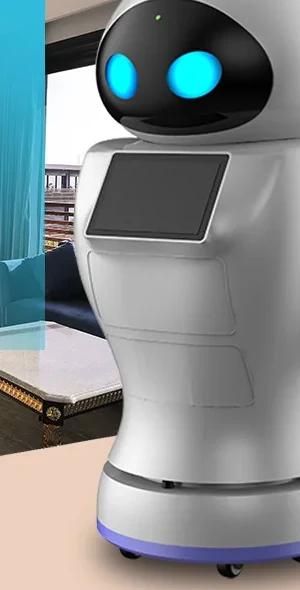
A waiter robot carries open trays in a dining room. It moves between the kitchen pass and the tables, usually on one floor, and a staff member or guest takes the plate. A hotel delivery robot carries a closed compartment to a guest floor, calls the lift, notifies the room and releases the item through a code or a door. The room service robot page describes the guest-triggered version; the hotel service robot overview explains the wider category.
What does a waiter robot do?
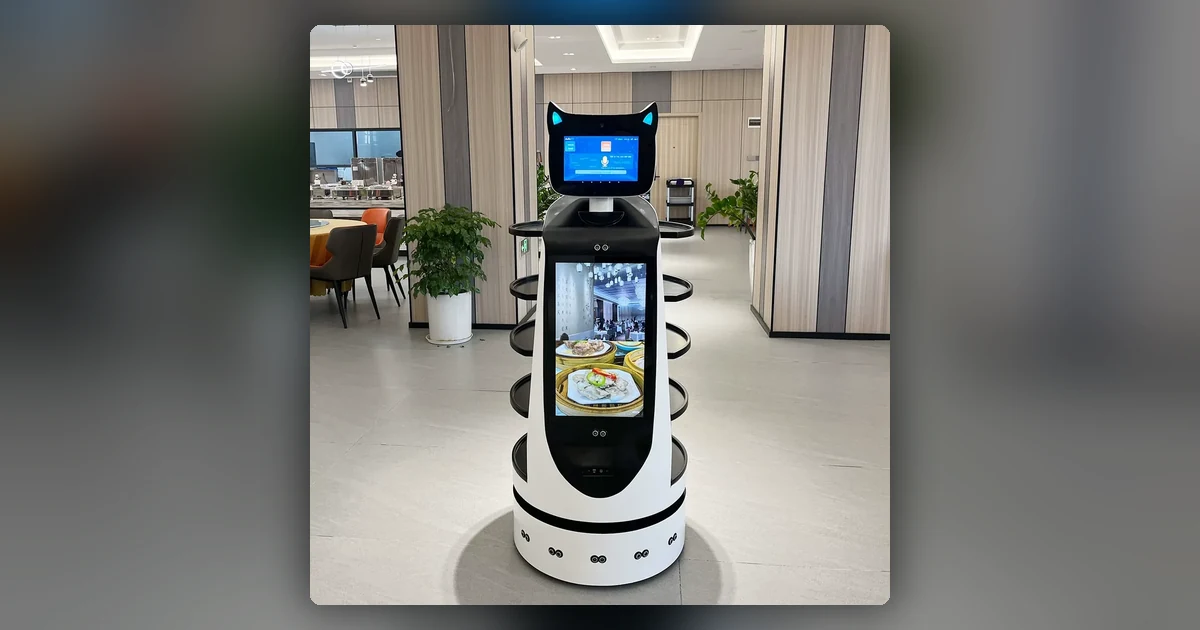
A waiter robot is a tray runner. Its job is to reduce the walk between the kitchen and the table, not to replace the waiter. The platform usually has a multi-tier tray stack, a screen or voice interface, and a safety envelope tuned for seated guests, chairs and hot food.
| Criterion | Waiter robot | Hotel delivery robot |
|---|---|---|
| Primary job | Run trays in a dining room | Deliver a closed compartment to a room |
| Payload | Open trays, plates, drinks | Sealed amenities, towels, parcels, packed F&B |
| Navigation | One floor, dense seating | Multi-floor, corridors, lift |
| Hand-off | Staff or guest at the table | Guest at the door via code, phone or app |
| Hygiene | Open food, immediate service | Closed compartment, scheduled cleaning |
| Lift integration | Rarely needed | Usually required |
| Best fit | Restaurant, banquet, lounge | Hotel room delivery, amenity runs |
The tray stack is the giveaway. If the machine is designed to present open plates at a table, it is a waiter robot. If it is designed to lock a compartment and call a lift, it is a delivery robot. The factory catalogue lists both configurations; the comparison guide explains the wider selection.
What does a hotel food delivery robot do?
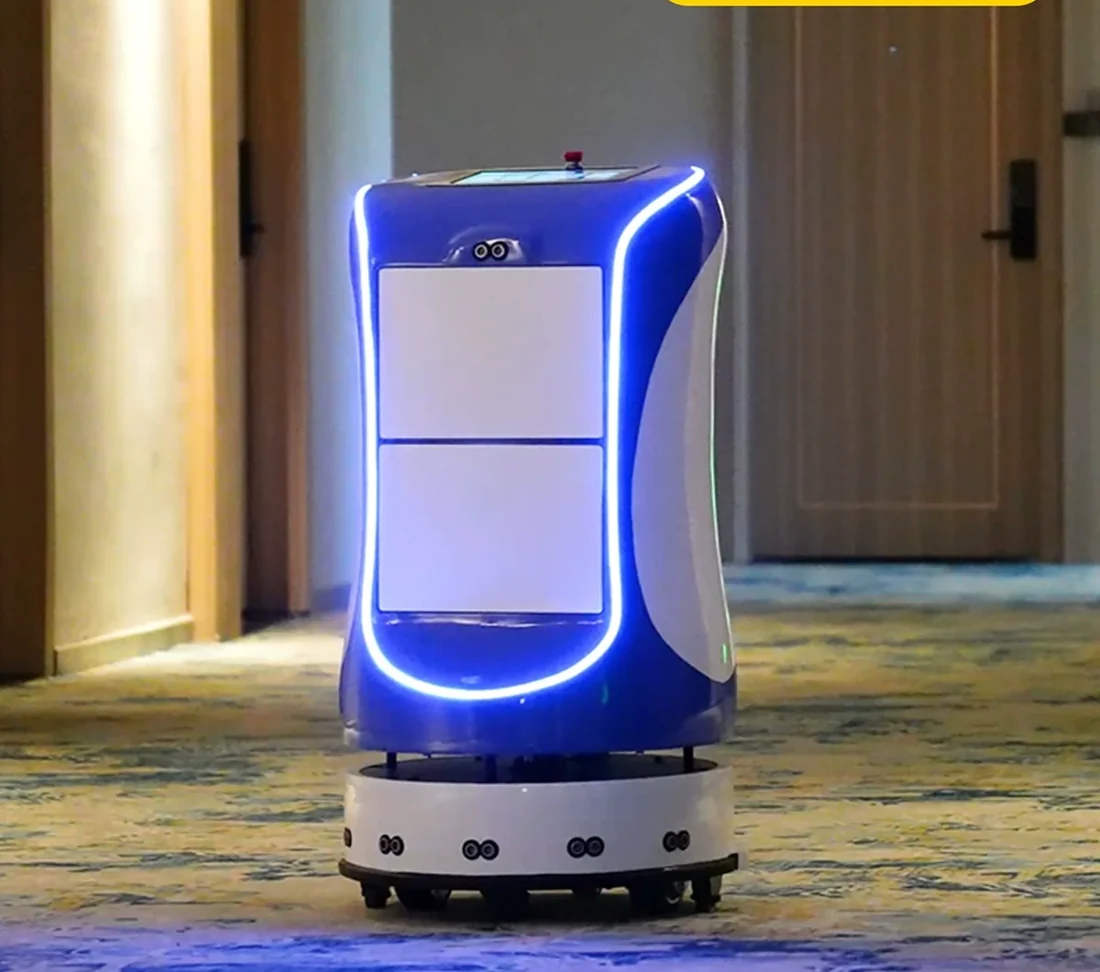
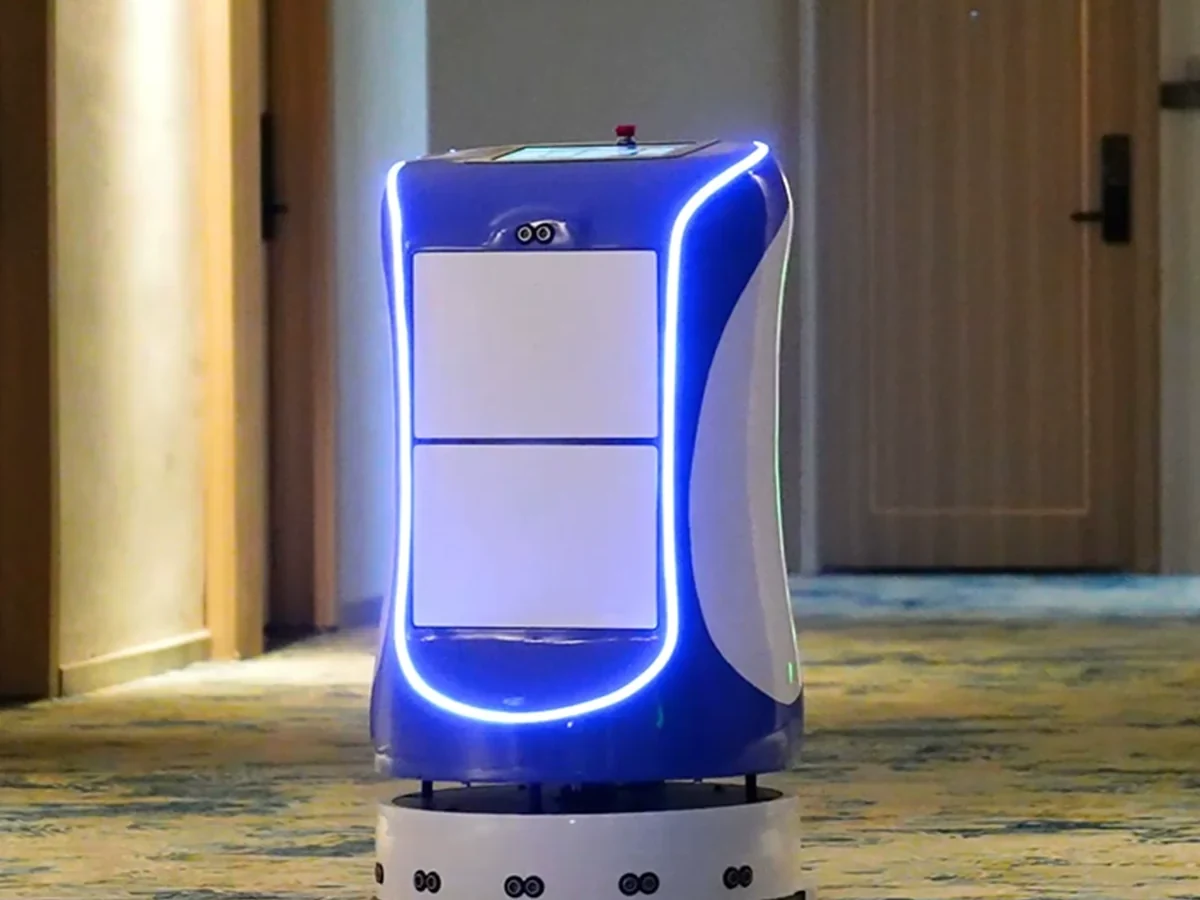
A hotel food delivery robot carries sealed or covered food from the kitchen or service core to the guest floor. It uses a closed compartment, a mapped route, a lift handshake and a notification path. The guest opens the compartment with a code, answers the room phone or uses an app.
The platform is usually the same base as an amenity delivery robot, configured with a food-safe compartment and a cleaning routine. The hotel delivery robot page lists the AOBOTETE configuration; the delivery workflow guide explains the six steps from request to hand-off.
Which one fits a restaurant?
A restaurant should buy a waiter robot only if the problem is tray running inside the dining room. The machine works best when:
- The kitchen pass and the tables are on one floor.
- The route is wide enough for a tray stack and a person.
- Staff are present to take the plate at the table.
- The menu fits an open-tray service model.
A restaurant that needs to send sealed orders to a pickup counter or a nearby building is describing a delivery robot, not a waiter robot. The product range shows the platform types; the buyer should match the machine to the route, not the menu photo.
Which one fits a hotel?
A hotel with room service needs a delivery robot. The job includes a lift, a guest corridor, a closed compartment and a notification. A tray runner cannot do that reliably, even if it can carry a covered plate.
A hotel with a large restaurant or banquet operation may need both: a tray runner in the outlet and a delivery robot for room service. The two machines have different cleaning, safety and staffing rules. The room service robot page covers the guest-triggered flow; the airport hotel solution shows a property with a long arrival route and a high volume of late deliveries.
What about autonomous delivery robots?
“Autonomous delivery robot” is a broad term. In a hotel, it usually means a machine that maps the building, plans its own route and calls the lift without a guide wire or a track. The autonomy is in the navigation, not in the guest interaction.
The important question is not whether the robot is autonomous. It is whether the building supports autonomy: Wi-Fi coverage, clear corridors, a lift interface and a mapped route. The elevator integration guide explains the lift handshake; a robot that cannot call the lift is not autonomous across floors.
What does each cost?
The cost drivers are different. A waiter robot spends its budget on tray capacity and dining-room safety. A delivery robot spends its budget on lift integration, network coverage and notification.
| Cost line | Waiter robot | Hotel delivery robot |
|---|---|---|
| Unit and trays | Main cost | Standard platform |
| Lift integration | Usually none | Survey and controller work |
| Notification | Screen or voice | PABX, app or QR code |
| Network | Local coverage | Full route coverage |
| Cleaning | Open-tray wash routine | Closed-compartment routine |
| Spare parts | Trays, wheels, sensors | Compartment, lift module, sensors |
The price guide explains how to compare the total project cost. The ROI calculator lets you test a delivery case with your own labour inputs. A lower unit price with excluded lift work is not a lower project cost.
What are the operating limits?
Both types share the same physical limits: door width, floor surface, people traffic and charging. The delivery robot adds lift wait, floor mapping and guest notification. The waiter robot adds table congestion, hot-food handling and tray cleaning.
A pre-purchase test should include a full route at peak, a blocked path, a lift wait (for delivery), a hand-off with a real guest or staff member, and a cleaning cycle. The deployment checklist lists the tests. The PMS integration guide explains the notification path for room delivery. For a route review, send the floor plan to the contact page.
Where to go next
- Compare the room service robot and hotel delivery robot configurations.
- Review the hotel service robot category and product range.
- Read what is a hotel robot for the definitions.
- Check the price guide before comparing quotes.
- Model the labour case with the ROI calculator.
- See reference deployments for operating patterns.
- Send the task log through the contact page.
- Message the factory on WhatsApp.
The right question is not “which robot is more advanced?”. It is “where does the item start, where does it end, and who opens the door?”. The answer decides the category.