Pricing
Hotel Robot Price Guide 2026: Configuration and Landed Cost
How hotel robot pricing works: the five quotation lines, the six factors that move the quote, landed-cost worksheets for UAE, Nigeria and the Philippines, and a payback model you can run.
Quick answer
A hotel robot quote has five lines: unit, lift, PMS/PABX, freight/duty and training/service. A standard unit includes a 12-month warranty and a 24-hour response. The other lines depend on the building and destination, so compare project scopes, not unit prices.
On this page
- How is a hotel robot priced?
- Why do quotes for the same robot differ?
- What moves the price up or down?
- What is included and excluded in the unit price?
- How do lift and PMS integration change the total?
- What is the landed cost in UAE, Nigeria and the Philippines?
- How do you calculate payback?
- What is the cheapest way to start?
- What should a hotel robot quotation include?
- Where to go next
A hotel robot quotation rarely looks like a product price. It looks like a small project: a unit, a lift interface, a PMS connector, freight, duties, training and a warranty. That is why two quotes for “the same robot” can differ by thousands of dollars without either supplier being dishonest.
This guide breaks the number into its parts. It is written for hotel operators, procurement teams and integrators who need to compare offers on the same scope — not to publish a catalogue price that will be wrong for most buildings.
How is a hotel robot priced?
A hotel robot quotation is built from five lines: the unit and configuration, lift integration, PMS/PABX work, freight and duties, and training/service. We do not publish a catalogue price; each line is confirmed in the written quotation.
| Product line | Model | Typical configuration | Pricing |
|---|---|---|---|
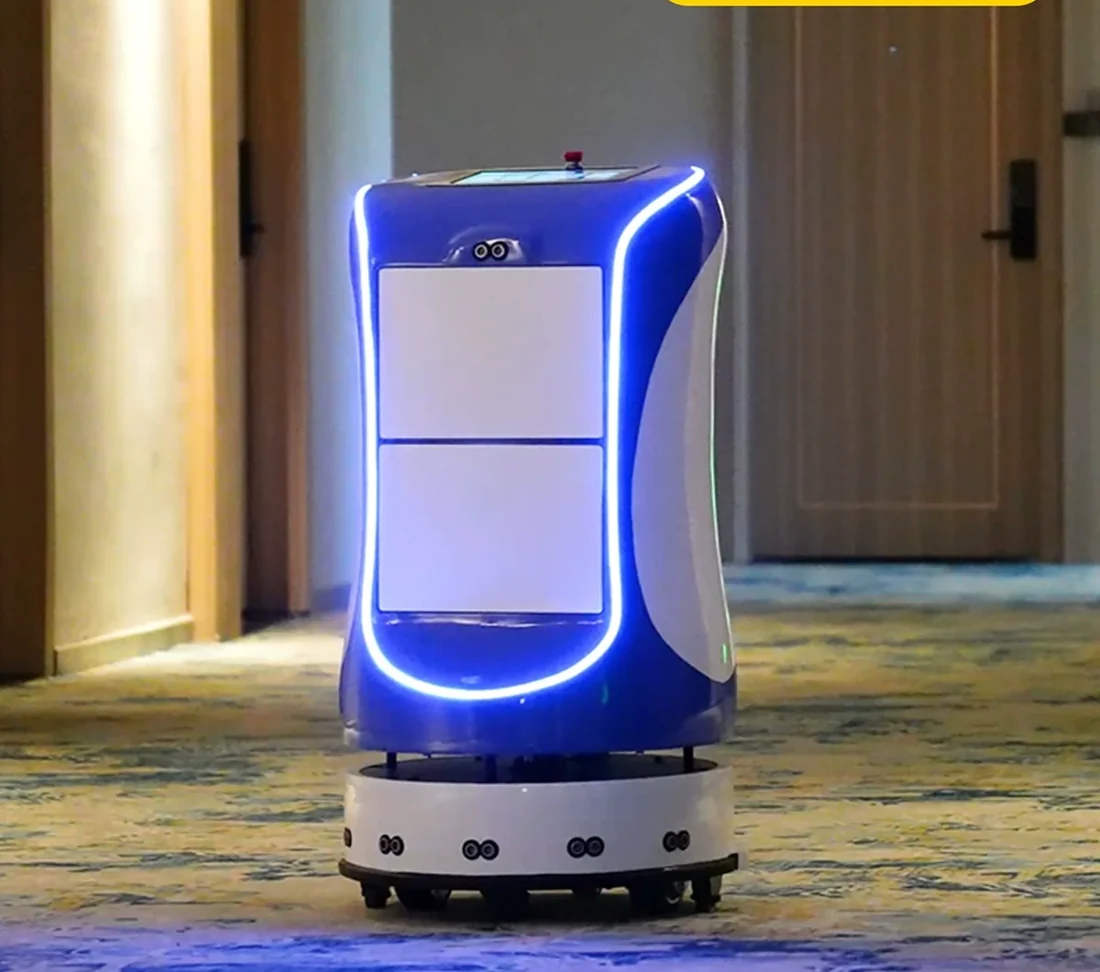
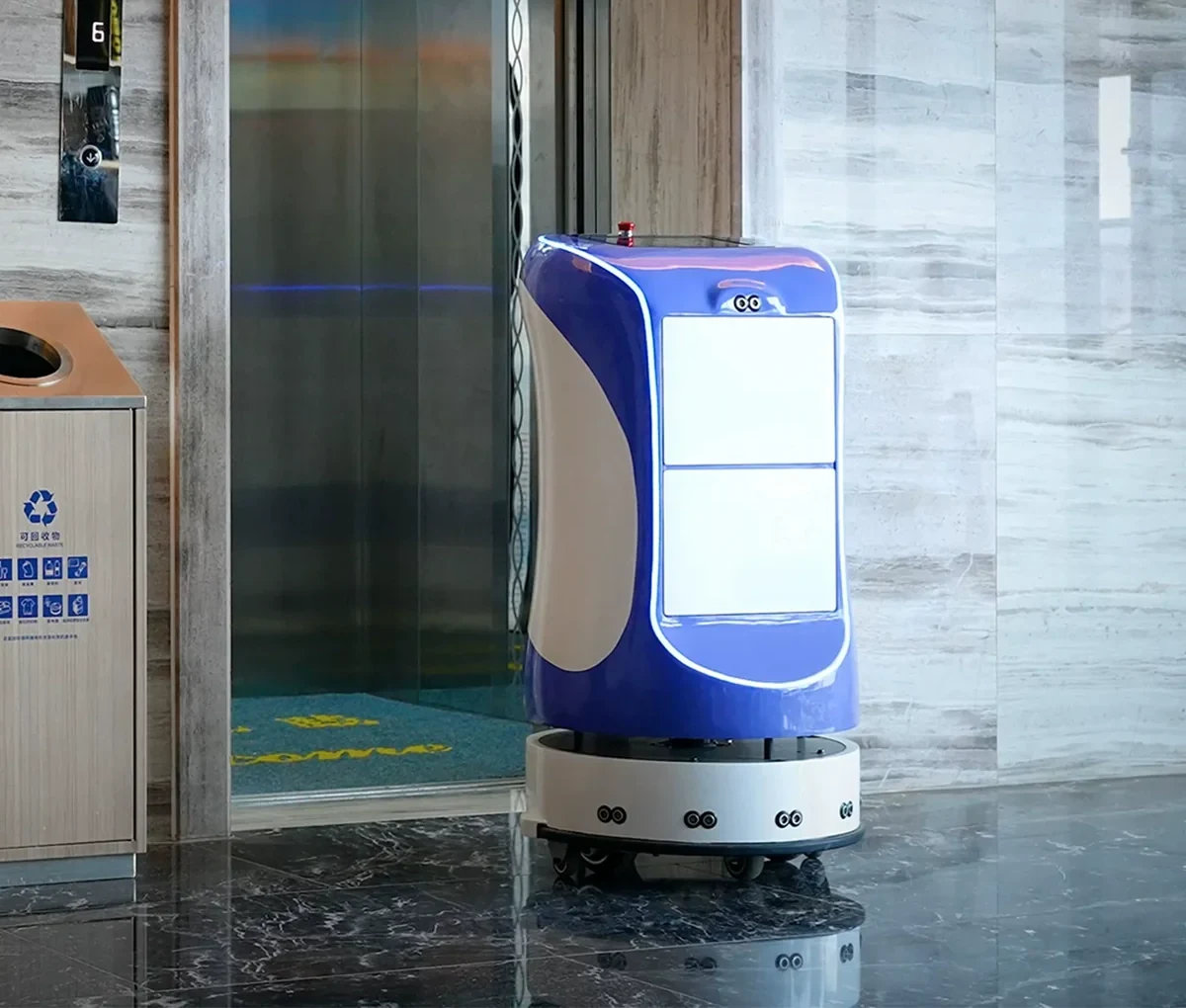
| Hotel delivery | AOBOTETE | Single or dual compartment, 10.1-inch screen | Contact for quotation |
| Food service | PEIQIAOBO | 21.5-inch chest + 10.1-inch head screen | Contact for quotation |
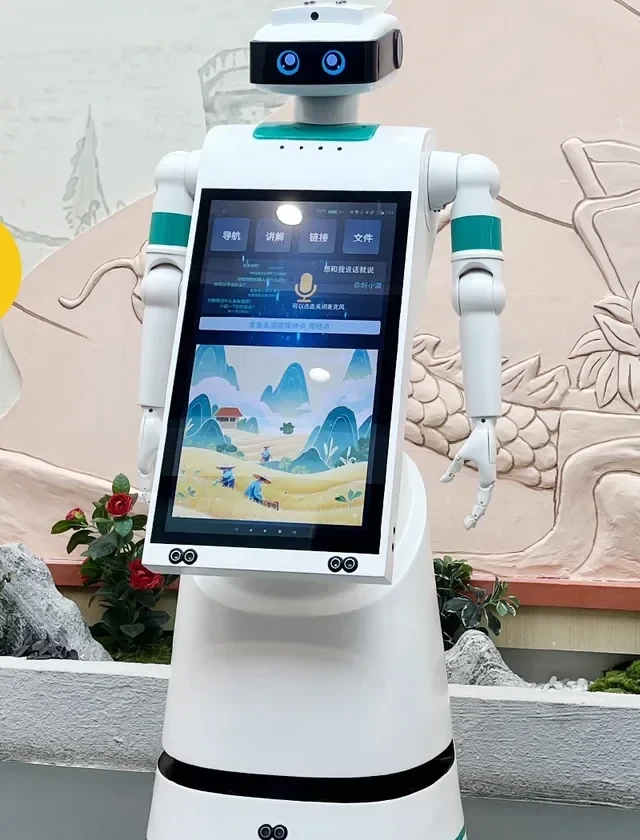
| Reception | baluo-3.0 | 15-inch chest + 7-inch expression screen | Contact for quotation |
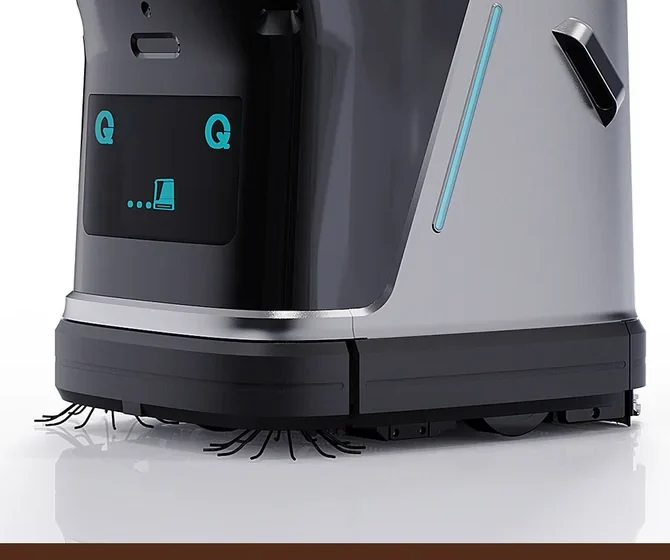
| Cleaning | Aobo Cleaning | 4-in-1 sweep / scrub / vacuum | Contact for quotation |
| Transport / AGV | Aobo Transport | Enclosed cabin, autonomous route | Contact for quotation |
The confirmed quotation depends on compartment layout, screen, language pack, lift method, PMS connector and destination market. The factory catalogue lists the model specifications behind each line.
Why do quotes for the same robot differ?
Because the scope differs. A quote that looks cheap often excludes the work that makes the robot usable in a hotel: the lift interface, the PMS connector, the mapping, the training and the spare-parts kit.
Ask every supplier to price the same five lines:
- The unit, with the compartment layout and screen size named.
- The lift integration method, including who supplies the interface.
- The PMS/PABX connector, including who tests it.
- Freight, insurance, duty and clearance responsibility.
- Training, documentation, warranty and spare parts.
A supplier who cannot break the price into these lines is not ready to quote a hotel project.
What moves the price up or down?
Six factors explain most of the variance:
- Compartment count — more doors, locks and control boards raise the unit cost.
- Screen size and finish — a larger display and custom bodywork add cost.
- Lift method — dry contact is cheapest; an API needs lift-vendor work.
- PMS / PABX connector — licence, mapping and testing time.
- Freight and duties — destination, weight and Incoterm.
- Spare parts and service — recommended for remote properties.
The two factors that surprise buyers most are the lift and the PMS. Both depend on third parties, and both can turn a two-week installation into a two-month project if access is not confirmed early. A cleaning robot has a different cost profile because it adds water, brushes and consumables instead of a lift interface.
What is included and excluded in the unit price?
A standard unit normally includes the platform, the standard configuration, mapping support, staff training and a 12-month warranty. It does not include:
- Lift controller work or the lift vendor’s charges.
- PMS or PABX connector development and testing.
- Freight, insurance, duty, VAT and clearance.
- Civil works, network upgrades or local certification fees.
- Additional training days or on-site support beyond the agreed scope.
If a quote does not state these exclusions, ask for them in writing. The exclusions are where the budget overrun lives. The buying guide turns them into RFP lines.
How do lift and PMS integration change the total?
The lift is usually the largest integration line because it involves the lift vendor, the controller, the fire strategy and the property’s engineering team. A dry-contact job with spare relays can be modest; an API integration may need a vendor change request, a security review and a longer schedule.
The PMS connector is smaller but depends on the PMS vendor’s API access. A read-only connector with a documented API is straightforward; a custom database view or a vendor change request takes longer.
The practical advice is to survey both before signing. A supplier who quotes a firm price without seeing the lift controller is guessing. The deployment checklist lists what the survey should record.
What is the landed cost in UAE, Nigeria and the Philippines?
Landed cost is the unit price plus freight, insurance, duty, VAT, clearance and inland delivery. The duty and VAT treatment depends on the HS code, the destination and the importer status. We issue a landed-cost worksheet with the quotation; the inputs are listed below.
| Market | What changes | What we need to quote | | --- | --- | --- | --- | | UAE | Freight, duty/VAT treatment, clearance, inland delivery | Destination city, importer status, HS code | | Nigeria | Freight, duty/VAT, clearance, inland delivery | Destination city, importer status, HS code | | Philippines | Freight, duty/VAT, clearance, inland delivery | Destination city, importer status, HS code |
Confirm the HS code, the duty rate and the VAT treatment with a customs broker before you budget. The worksheet moves with freight rates, the Incoterm and the importer’s registration status. For a destination-specific check, send the port and Incoterm through the contact page.
How do you calculate payback?
Payback is a function of displaced staff time, not the price alone. Start with the property’s own delivery log.
If a hotel handles 40 deliveries per day and the robot takes 60% of them, that is 24 tasks per day. At 10 minutes of staff time per task, the robot releases about four hours of front-office time per day. Value that time at the fully loaded labour cost, then divide the project cost by the monthly value.
With the property’s fully loaded labour rate and the quoted project cost, the calculator returns a simple payback before service and spares. The result is a planning estimate, not a guarantee. Use the ROI calculator with your own inputs, and read the ROI guide for the hidden cost lines.
What is the cheapest way to start?
A single delivery unit on a service lift, focused on amenity delivery, is usually the lowest-cost pilot with the clearest measurement. It tests the route, the lift rule and the staff workflow before you commit to a fleet.
If the building integration is uncertain, rent or negotiate a pilot unit with a return option. The cost of a wrong fleet is much higher than the cost of a slower start. The 100-room pilot plan shows how to size the first unit.
The mistake to avoid is buying a fleet to cover every shift before the first route is stable. One unit, one task, one named owner — then expand.
What should a hotel robot quotation include?
A comparable quotation should name the model, compartment layout, screen size and language pack; the lift method and who supplies the interface; the PMS/PABX scope and testing responsibility; the freight, Incoterm and duty responsibility; and the training, documentation, warranty and spare-parts terms.
If one of these is missing, the price is not comparable. Ask for the missing line before you compare the totals. The product range and factory page show what the platform includes; the quotation should show what the project includes.
Where to go next
- Compare the hotel delivery robot and reception robot configurations.
- Review the cleaning robot if public-area floors are the target.
- Browse the factory catalogue for model-level specifications.
- Read the buying guide before the RFP.
- Model the payback with the ROI calculator.
- Check the deployment checklist before the survey.
- Send the destination and room count through the contact page.
- Message the factory on WhatsApp.
A price is only useful when it is attached to a scope. Ask for the five lines, compare the same work, and the cheapest offer will stop looking like the cheapest project.