Scenario
Hotel Robot for a 100-Room Hotel: Sizing the First Pilot
A practical plan for a 100-room hotel robot pilot: fleet size, first tasks, lift rules, budget, 30-day metrics and the expansion path.
Quick answer
A 100-room hotel with 30 daily deliveries and a 60% robot share needs about 18 tasks a day. One unit covers 48 tasks per 8-hour shift, so the pilot starts with one unit and staff fallback; run a 30-day pilot with four metrics.
On this page
- What does a 100-room hotel need from a robot?
- How many robots does a 100-room hotel need?
- Which tasks should the first robot take?
- What lift rule works for a 100-room hotel?
- What does a 100-room pilot cost?
- How do you measure success in 30 days?
- What is the expansion path?
- What are the common mistakes?
- Where to go next
A 100-room hotel is the most common starting point for a robot pilot. It is large enough to have a real delivery load, small enough that one unit can make a visible difference, and usually has a service lift that can be integrated.
But the pilot still fails if it is sized from a brochure instead of the property’s own request log. This guide walks through the numbers and the operating rules for a 100-room property.
What does a 100-room hotel need from a robot?
Three things, in order:
- A reliable delivery leg from the service core to the guest floor.
- A clear guest hand-off that does not require a staff member at the door.
- An exception path that returns the task to the front desk when something goes wrong.
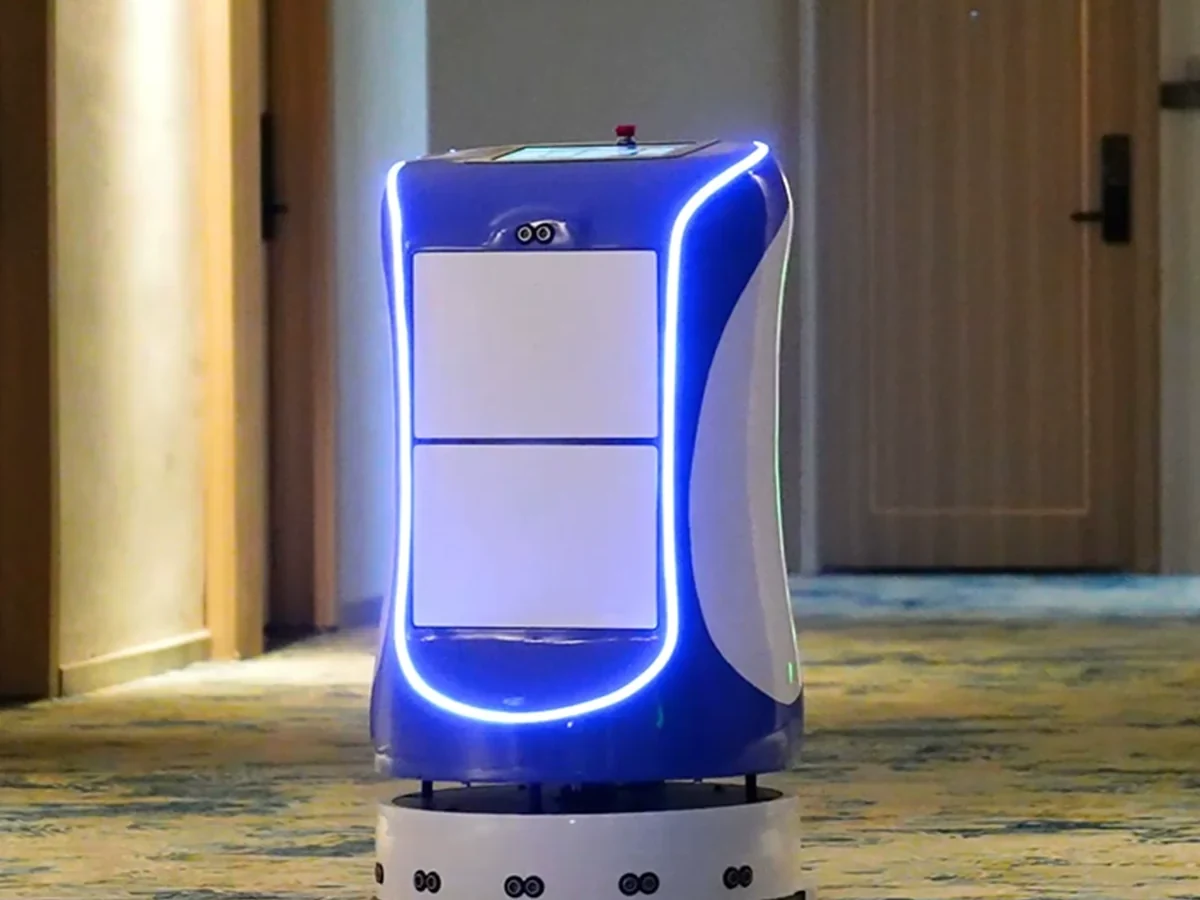
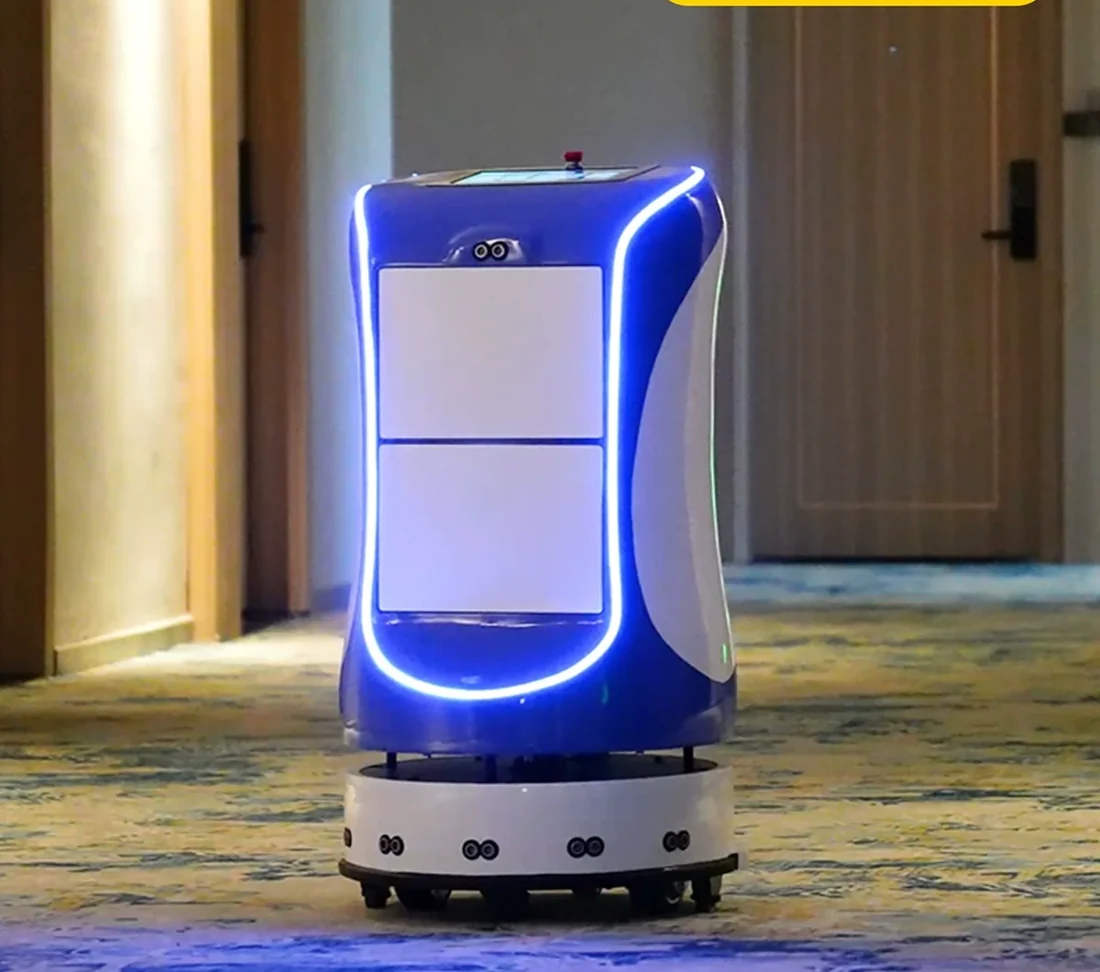
Everything else — the screen, the language pack, the branding — is secondary to those three. A pilot that gets the delivery leg right but the exception path wrong will be bypassed during the first busy shift. The hotel delivery robot page shows the platform inputs; the room service robot page shows the guest-triggered flow.
How many robots does a 100-room hotel need?
Start with the daily request volume, not the room count.
| Input | Example value | Note |
|---|---|---|
| Rooms | 100 | Property data |
| Daily room deliveries | 30 | Front desk log or estimate |
| Robot share | 60% | Pilot target |
| Robot tasks per day | 18 | 30 × 60% |
| Round-trip time | 10 minutes | Site assumption |
| Tasks per robot per shift | 48 | 8 hours × 6 per hour |
| Robots for the pilot | 1 | With staff fallback at peak |
One unit covers the pilot with spare capacity. The spare capacity is useful: it absorbs peaks and allows the robot to charge without stopping the service.
A second unit is justified when the property needs two-shift coverage, when the lift wait is long, or when the robot must charge during the service window. Redundancy is part of capacity, not a luxury. Run your own numbers with the ROI calculator; the ROI guide explains the cost lines behind the result.
Which tasks should the first robot take?
Amenity and towel delivery. It is the best first task because it is frequent, light, predictable and easy to measure.
A typical first-task list:
- Extra towels, pillows and bedding.
- Toothbrush, slippers, adapters and baby kits.
- Water and minibar restock.
- Late-night F&B after the route is stable.
- Parcels after the compartment and chain-of-custody rules are agreed.
Do not start with hot food or luggage. Hot food adds temperature and spill constraints; luggage adds weight and a different hand-off. Prove the route first. The delivery workflow guide explains the six steps from request to hand-off.
What lift rule works for a 100-room hotel?
Four options, in order of preference:
- Dedicated service lift with robot priority and a manual override.
- Shared service lift with a peak-hour exclusion window.
- Guest lift at off-peak times with a staff escort.
- Manual staff-assisted lift if no automatic method is viable.
The rule should be written down and included in the front-desk training. “The robot uses the service lift unless a guest needs it” is not a rule; “the robot waits 90 seconds, then requeues” is. The elevator integration guide explains the controller methods and the fire-mode test.
What does a 100-room pilot cost?
The unit price is quoted per configuration. The project total usually adds lift integration, PMS/PABX work, freight, duties and a spare-parts kit.
| Line | Indicative treatment |
|---|---|
| Unit | Contact for quotation |
| Lift integration | Quoted after survey |
| PMS / PABX connector | Quoted after technical call |
| Freight, duty, clearance | Quoted per shipment |
| Training and documentation | Included in deployment |
| Spare kit | Optional, recommended |
A single-unit pilot is the lowest-cost way to test demand. If the building integration is uncertain, rent or negotiate a pilot unit with a return option. The price guide explains the landed-cost lines; the hotel robot price page shows the current listing.
How do you measure success in 30 days?
Use four numbers:
- Tasks completed per day — is the robot doing the volume?
- Average round-trip time — is the lift rule working?
- Exception rate — how often does a human have to rescue it?
- Staff time released — is the front desk feeling relief?
Set the baseline before the pilot. If the front desk does not track delivery time today, spend a week logging it manually. A pilot without a baseline cannot prove anything. The deployment guide covers the site preparation; the deployment checklist lists the tests.
What is the expansion path?
If the pilot works, expand in this order:
- Add the second shift, not the second robot, if one unit can cover it.
- Add a second unit for redundancy and peak coverage.
- Add late-night F&B and parcels to the task mix.
- Add a reception unit only if the lobby has a separate guest-flow problem.
Do not expand to a second building or a second lift bank until the first route is stable. Each new integration repeats the survey and test work. The hotel service robot overview shows the types; the comparison guide explains how to choose the next one.
What are the common mistakes?
Five mistakes account for most disappointing pilots:
- Buying for the brochure, not the request log. The robot ends up oversized or underused.
- Skipping the lift exception tests. The normal call works; the busy lift does not.
- No named owner. The task queue is nobody’s job.
- No baseline. The property cannot show what changed.
- Expanding too early. A second unit is added before the first route is stable, doubling the exceptions.
The pilot is a learning exercise with a commercial purpose. Give it a baseline, a scorecard and an owner, and the decision to expand becomes evidence-based rather than emotional. The case studies page shows reference deployment patterns for the same size of property.
Where to go next
- Review the hotel delivery robot and room service robot configurations.
- Check the price guide and ROI guide.
- Run the pilot numbers with the ROI calculator.
- Prepare the site with the deployment checklist.
- Read the delivery workflow guide.
- See the city hotel solution for a 100–180 room layout.
- Browse the product range and factory catalogue.
- Send the room count and lift type through the contact page.
- Message the factory on WhatsApp.
The room count sets the context; the delivery log sets the fleet size. Start with the log, and the pilot has a number to beat.