Selection
Hotel Service Robot Types: 7 Categories and How to Choose
Delivery, room service, reception, concierge, cleaning, luggage and food-service robots compared by task, guest contact, operating load and first-project fit.
Quick answer
Seven types cover delivery, room service, reception, concierge, cleaning, luggage and food service. baluo-3.0 uses a 15-inch chest screen, a 7-inch face screen, a 20Ah battery and a 40 kg body, with a 12-month warranty.
On this page
A hotel service robot is any mobile machine that performs a guest-facing or back-of-house service: delivering items, welcoming guests, carrying luggage or cleaning floors. The category is broad, and that is the problem. Two “service robots” can have different jobs, different integrations and different payback models.
This guide separates the seven types a hotel is likely to encounter, then shows how to choose the first one. It is a selection map, not a product ranking.
What is a hotel service robot?
The term covers the platform, the task software and the integration. A service robot may share a mobile base with another model, but the task module and the hand-off decide what it can actually do. A delivery robot with a locked compartment is not interchangeable with a reception robot with a chest screen, even if both move autonomously.
The hotel service robot overview describes the umbrella category. The product range lists the platforms the factory builds, and the catalogue shows the model-level specifications.
What are the seven types of hotel service robots?
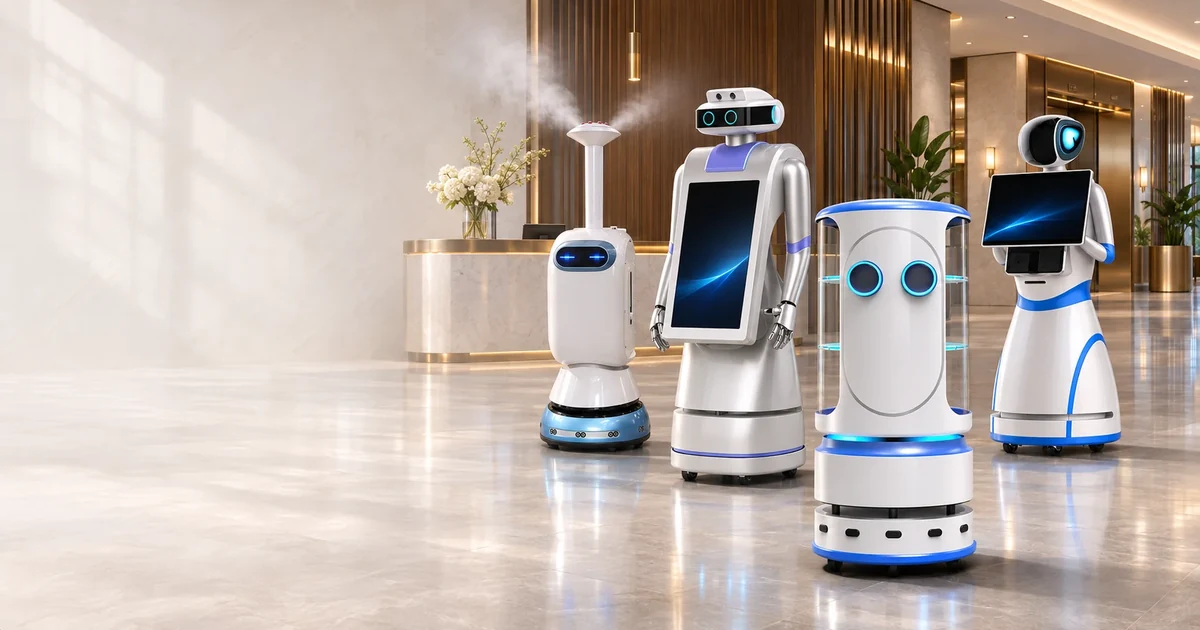
The table compares the primary task, the level of guest contact and the typical platform. The links go to the type page, not a generic brochure.
| Type | Primary task | Guest contact | Typical platform |
|---|---|---|---|
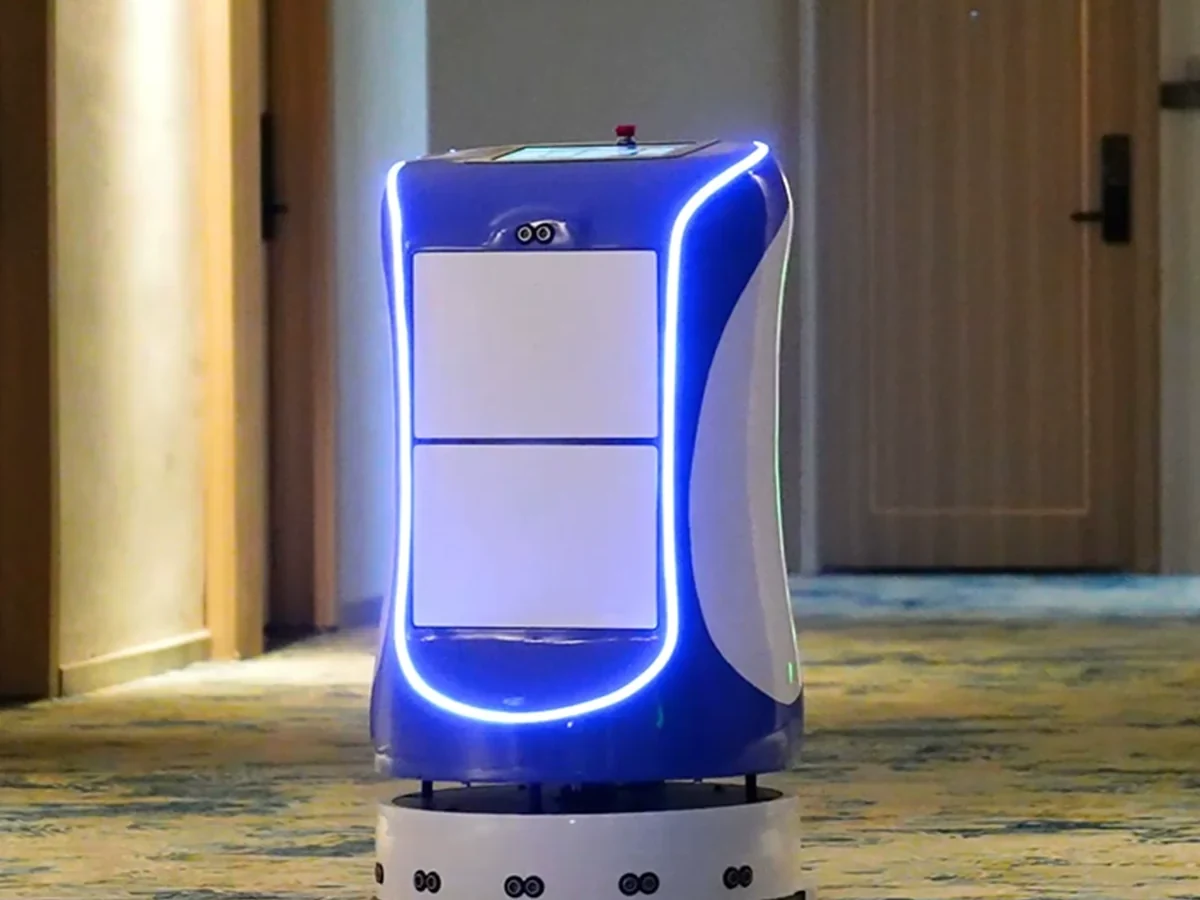
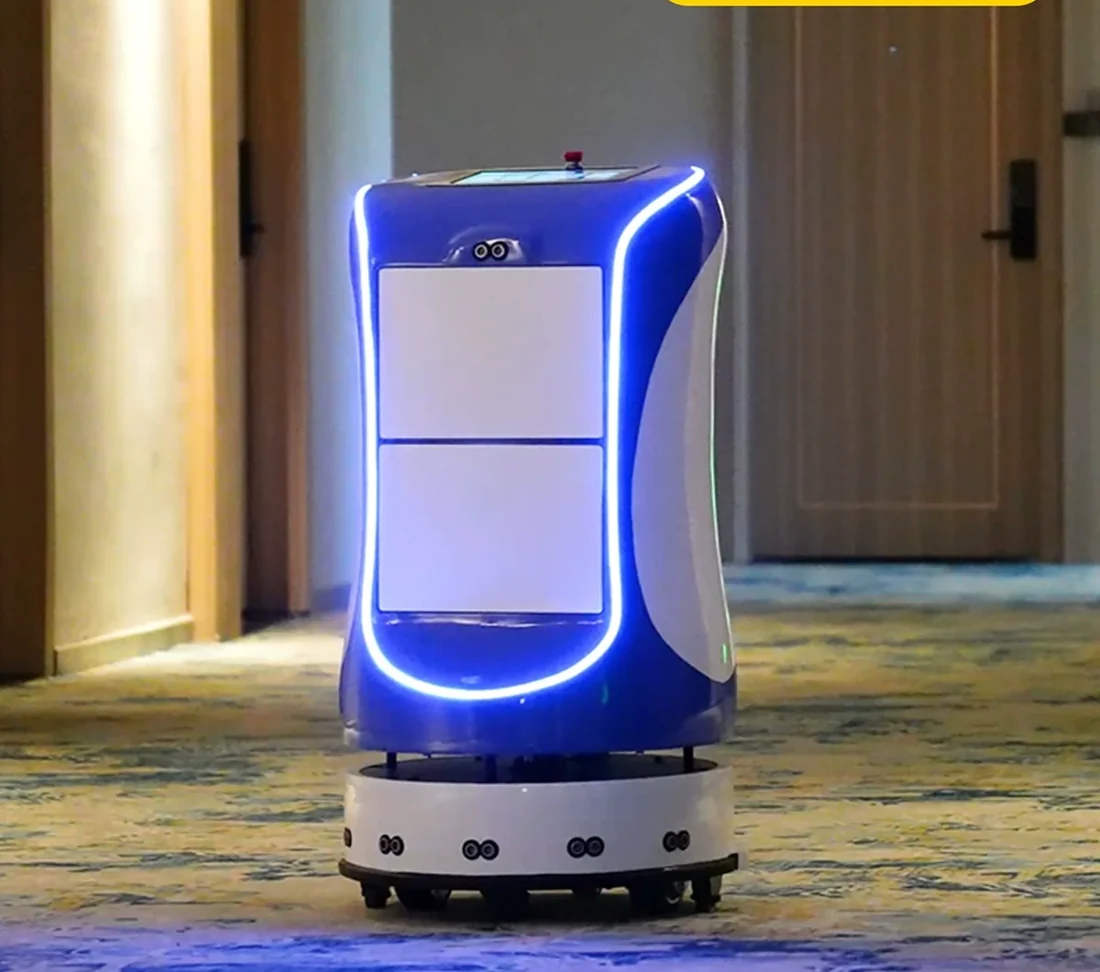
| Delivery robot | Amenities, towels, F&B and parcels to guest floors | Low to medium | AOBOTETE |
| Room service robot | Guest-triggered delivery with phone or app notice | Medium | AOBOTETE |
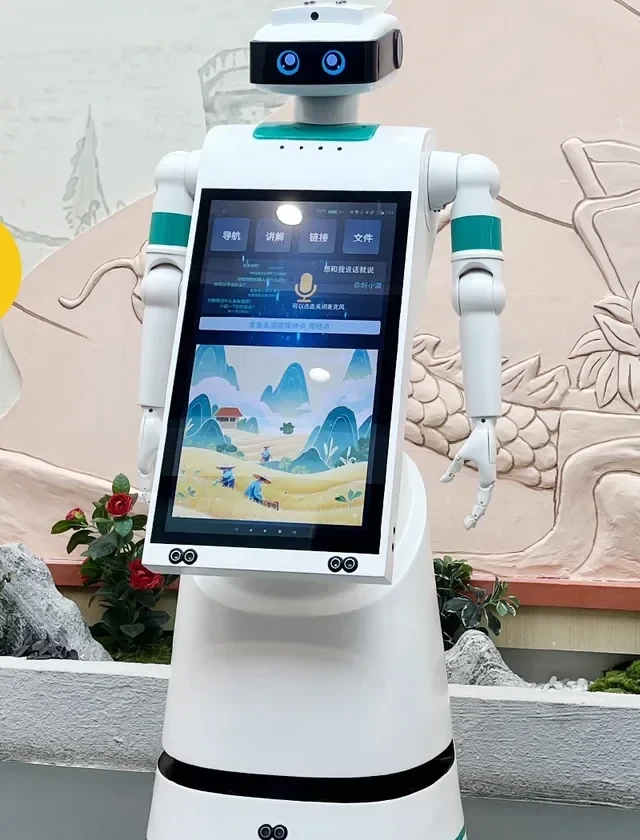
| Reception robot | Welcome, check-in support and wayfinding | High | baluo-3.0 |
| Concierge robot | Guidance, recommendations and conversation | High | baluo-3.0 |
| Cleaning robot | Sweep, scrub, vacuum and dust-mop public areas | Low | Aobo Cleaning Series |
| Luggage robot | Bag and goods transport on a fixed route | Medium | Aobo Transport Series |
| Food-service robot | Tray running in outlets and banquet rooms | Medium | PEIQIAOBO |
The distinction matters because each type has a different operating load. A delivery robot needs a lift rule. A reception robot needs content maintenance. A cleaning robot needs water, a charging bay and a maintenance schedule.
What do delivery and room service robots do?
These two are the most common first purchase. The delivery robot moves a closed compartment from the service core to the guest floor. The room service robot is the guest-triggered version: the request comes from the room phone, an app or a QR code, and the robot handles the notification.
The work is frequent, light and predictable. That makes it easy to measure: tasks per day, round-trip time, exception rate and staff minutes released. It also makes the payback case defensible, because the property can compare the robot’s tasks with its own delivery log.
The constraint is the building. A delivery pilot needs a lift method, Wi-Fi coverage on every route and a loading workflow. A hotel that cannot name those three things is not ready.
What do reception and concierge robots do?
A reception robot handles the first thirty seconds of a lobby interaction: welcome, direction, common questions and check-in support. It is strongest when the lobby has a queue at peak, poor wayfinding or a wide language mix.
A concierge robot is closer to a guide: outlet directions, hotel information, recommendations and multilingual conversation. The hardware may be similar, but the content and the placement are different. A concierge unit usually sits where guests linger; a reception unit sits where they arrive.
Neither type is a labour-saving case in the same way as delivery. The value is guest experience, queue relief and language coverage. That value is real, but it is harder to put on a payback sheet.
Cleaning and disinfection robots
A hotel cleaning robot handles public-area floors: lobby, corridors, ballrooms and back-of-house. The 4-in-1 series covers sweep, scrub, vacuum and dust mop, with auto water change and recharge. The exact configuration and price are confirmed in the quotation.
The operating model is different from delivery. Cleaning is scheduled, not requested. The robot needs a water supply, a charging bay and a maintenance routine. The housekeeping team still handles rooms, soft furnishings, bathrooms and detail work. The robot covers the large flat areas; people cover the edges.
Luggage and transport robots
A luggage robot carries bags or goods on a fixed route: lobby to room, lobby to storage, or back-of-house supply runs. It is useful in airport hotels, large resorts and properties with a long arrival walk.
The constraint is the hand-off. A guest may not want to leave a bag with a machine, and a heavy bag needs a stable platform and a staff-assisted load. The business case is strongest when the route is long and the staff walk is repetitive.
Food-service robots
A food-service robot carries trays in a restaurant, banquet room or lounge. The platform is usually a tray runner with a different safety envelope around seated guests and hot food. It is not the same as a room delivery robot with a locked compartment.
Hotels with a large F&B operation may use both: a tray runner in the outlet and a delivery robot for room service. A hotel without a restaurant should not buy a tray runner just because the category is popular.
How do you choose the first type?
Score each type against four criteria: task frequency, measurability, building fit and guest value.
| Type | Setup effort | Measurable value | First-project fit |
|---|---|---|---|
| Delivery | Medium: lift, Wi-Fi, loading | High: tasks and minutes | Strong |
| Room service | Medium: notification path | High: guest requests | Strong |
| Reception | Low to medium: content | Medium: queue and wayfinding | Second project |
| Concierge | Low: content and placement | Low to medium | Second project |
| Cleaning | Medium: water, charging, schedule | Medium to high: area coverage | Strong if public areas dominate |
| Luggage | Medium to high: route and load | Medium: staff trips | Later |
| Food service | Medium: outlet layout | Medium: tray runs | Only with a restaurant |
The first project should be the type with the highest task frequency and the clearest baseline. For most hotels, that is delivery. The comparison guide explains the trade-offs; the price guide shows how the configuration changes the quote.
Where to go next
- Compare the delivery robot and room service robot configurations.
- Review the reception robot and concierge robot for lobby work.
- See the cleaning robot and luggage robot pages.
- Browse the full product range and factory catalogue.
- Read what is a hotel robot for the category definition.
- Estimate the first project with the ROI calculator.
- Send the property profile through the contact page.
- Message the factory on WhatsApp.
Choose the task before the technology. A hotel that starts with “we need a robot” usually buys a demo. A hotel that starts with “this task costs us 40 staff hours a week” usually buys a working system.